Justin Mares: Scaling a Bone Broth Empire to $100s of Millions, and How To Prevent Chronic Disease
In conversation with the founder of Kettle & Fire and TrueMed
My guest today is Justin Mares. Ten years ago he spent almost all of his savings on a production run of slow-simmered bone broth. Kettle & Fire, which in the early days over 300 manufacturers turned down, is doing hundreds of millions in revenue. Today he is the founder and CEO of TrueMed, rerouting the $180 billion sitting in HSA/FSA accounts toward prevention — for which he recently raised $34M, led by a16z. He’s a consumer health nerd, who cares deeply about empowering the everyday consumer to take charge of their health, like finding personal genetic health risks with AI, preventing Alzheimer’s and more.
We talk about:
- Vertically integrated manufacturing and convincing manufacturers to take on an entirely different profile of product (300+ said no)
- Founder hardships in Kettle & Fire: coming “close to dying” and financial maneuvering
- Regulatory capture in healthcare, and creating products that change core incentives (TrueMed just raised a $34M Series A to do this)
- Health is not a rich person’s game anymore: taking charge of personal health using AI tools like Claude/ChatGPT, finding genetic risks for Alzheimer’s, peptides, and interventions for “more life”
Nicole
Kettle & Fire is a big hit in the consumer space, with hundreds of millions of dollars in topline revenue. Today, you are the founder of TrueMed, an HSA/FSA payments business. It seems like you’ve spent your entire life in healthcare and trying to rewire the health system from different angles. How did you build a physical goods business, and end up in software?
Justin
I started Kettle & Fire in late 2015 with my brother in SF. I thought it would be a nice side project, a small business for us. Within six months it took off. We did $3 million our first year, $10 million the next, and kept growing at a very healthy clip, especially for a CPG company.
Working in the food system, on prevention, on bone broth and nutrient density, I became more and more convinced that the American food system is uniquely toxic, and that food system issues are upstream of so many of the chronic disease problems America struggles with. We spend more on healthcare and have worse outcomes than any other developed nation. Americans are uniquely sick, and our food system is a big part of that.
So I wanted to build a food company that, yes, was more expensive, but was doing things the right way, where people eat our products and I’m 100% convinced it’s the best choice in the category. As a result we’ve grown tremendously. We’re in about 25,000 grocery stores, we built a factory, we’re doing hundreds of millions in revenue. It’s something I’m very proud of.
But after some number of years, I became convinced that if we want to make a dent in the chronic disease crisis, the layer to intervene on wasn’t “we make a good product consumers can opt into.” It was: how do you fix the incentives that lead to so many million Americans being sick? I don’t think Americans want to be sick more than people in other countries.
Nicole
The evolution of thought is you start somewhere people can opt in, then you realize the healthcare system isn’t an opt-in system. Everyone has to subscribe to these payer rules and environments that are hostile to preventative care.
Justin
Completely. You have no way to opt out of a food system that uses more glyphosate than any other nation in the world, or that uses a horrendous chemical regulatory environment called GRAS, which they’re seemingly working on cleaning up, or that incentivizes farmers via massive crop subsidies to use the cheapest, worst ingredients. For the vast majority of things you can buy at the grocery store, you can’t opt out of that system.
The only way to opt out is spending money with companies like Kettle & Fire that invest tremendous energy in decisions that lead to you being healthier. But almost all the time, those decisions lead to a much more expensive product.
That’s what got me into HSA. What if our more expensive product, which is also delivering health benefits that others aren’t, could be considered part of medical care, or part of the healthcare system, or incentivized? And as I went down that rabbit hole: you need to build new infrastructure to unlock savings and move people in the right direction from an incentive standpoint.
Vertical integration and manufacturing long simmer bone broths
Nicole
I want to talk about manufacturing, because I don’t think you’ve covered it much. You’ve told the story that you called a bunch of co-packers — maybe 300. Why was it so hard to manufacture bone broth?
Justin
Bone broth is hard for a couple of reasons, especially the way we make it. A lot of companies (the whole food system, really) trade on lowering costs by cutting as many corners as they can, which leads to higher margins. And because big food companies aren’t growing, the only way they hit their earnings-per-share target is by improving efficiency, which often means making the product worse.
You can make a bone broth that tastes good two ways.
- You can cook it for a very long time, which is what we do.
- You can use short cook times and add additives and flavor modifiers that make it taste like something cooked for a long time. You trade off nutrient density and mouthfeel, but you get there at a cheaper price.
When we were calling manufacturers, we said we wanted to cook our product for 24 to 48 hours. All of them said most of their products are 2- to 4-hour cook times. If I’m running a manufacturer doing 4-hour cooks, I can fit five or six customers into that time. With you, on a 24-hour cook, there’s a lot of customization, I’m doing one thing, I don’t know how to staff it, and it doesn’t fit my staffing model.
There’s also customer concentration risk. If I’m doing 24-hour cooks just for you and you’re eating up a huge percentage of my line time, that’s a risk for me: you could go under. I’m taking a risk on a startup where I’ll have huge customer concentration. Or I can work with five big food companies using the same line time, who aren’t going to go out of business, and that gives me more leverage: “No, I’m not going to give you a better price. I have five other customers who want that line time.”
So there are these industry dynamics, and no one had done it before. No one is incentivized to take a risk on a small startup with no idea what it’s doing and no operating history, and then go through all the work of figuring out product development with you: how to do your long cook times on their machines, all of it. It took a lot of selling.
The main thing is that these companies were built to be hyper-efficient. If you come in wanting to do something differently, you have to be very good at selling the owners on doing something different with you. And they aren’t incentivized to, in any sense of the word.
We learned a lot about getting these people to do things our way, and about pushing back on their natural tendencies, which are to do things the fastest, cheapest way and then use flavor chemistry to override the trade-offs that come with it. That was hard, because these people don’t want to change. How you make money in manufacturing is by not changing your process all the time. It’s getting very good at doing one thing, making it consistent, then optimizing at the margins to improve margin and quality. That’s the story of all manufacturing.
Nicole
Why do you think the manufacturing partner you ended up with was willing to take the risk?
Justin
We cold-emailed Mark Cuban with the story of my 19-year-old brother trying to figure this out, and his team introduced us to the manufacturer we ended up working with. That social proof made them take us more seriously. They were also a small company trying to grow.
And frankly, for the first year they ripped us off on pricing. We were dumb enough to accept their insanely high price. We were probably double the margin of any of their other customers. So it was that combination: they got the social proof, and they had line time because they weren’t a massive scaled business yet.
Nicole
Can you walk me through what the plant looks like? Is it vats of bones?
Justin
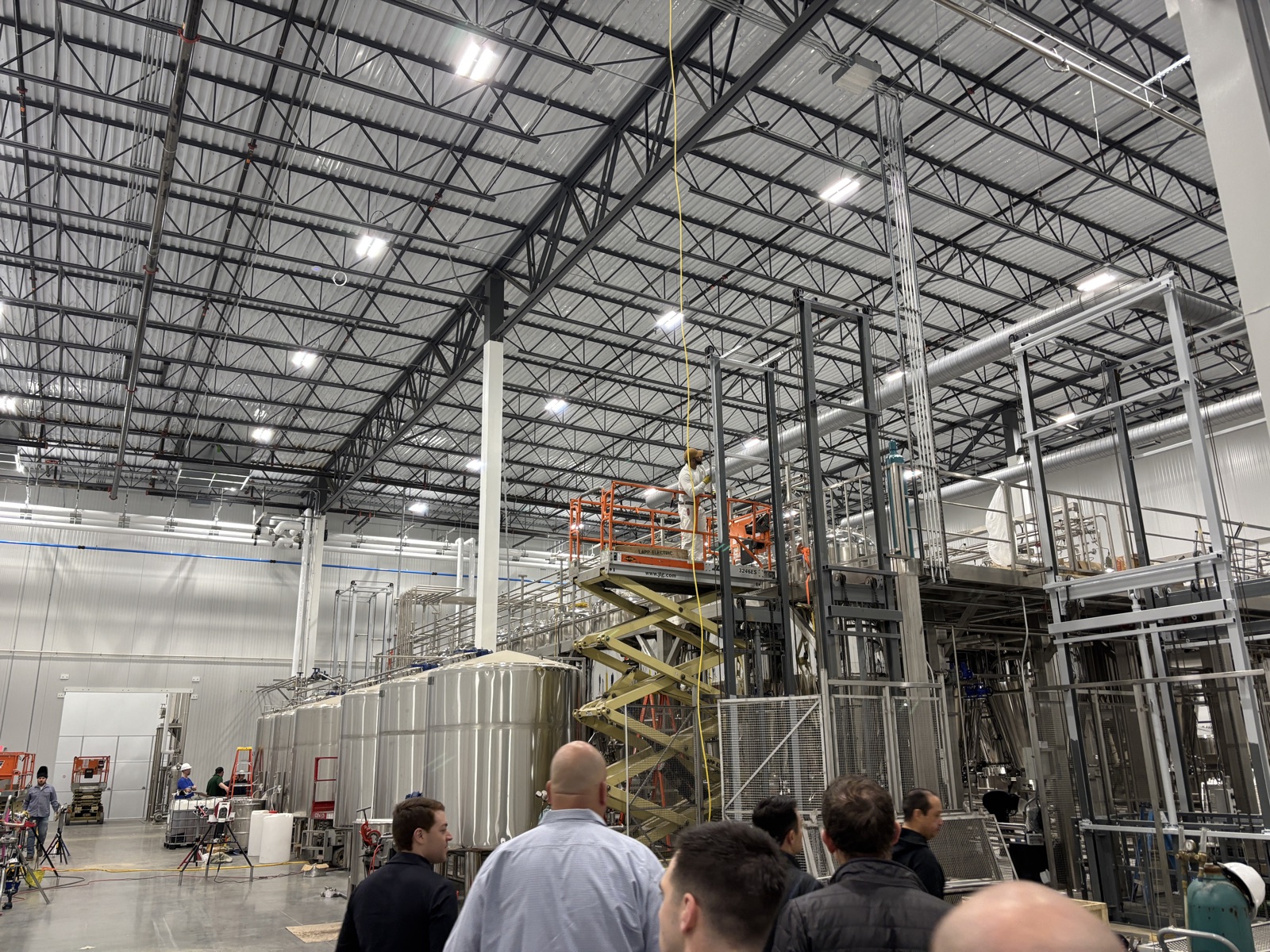
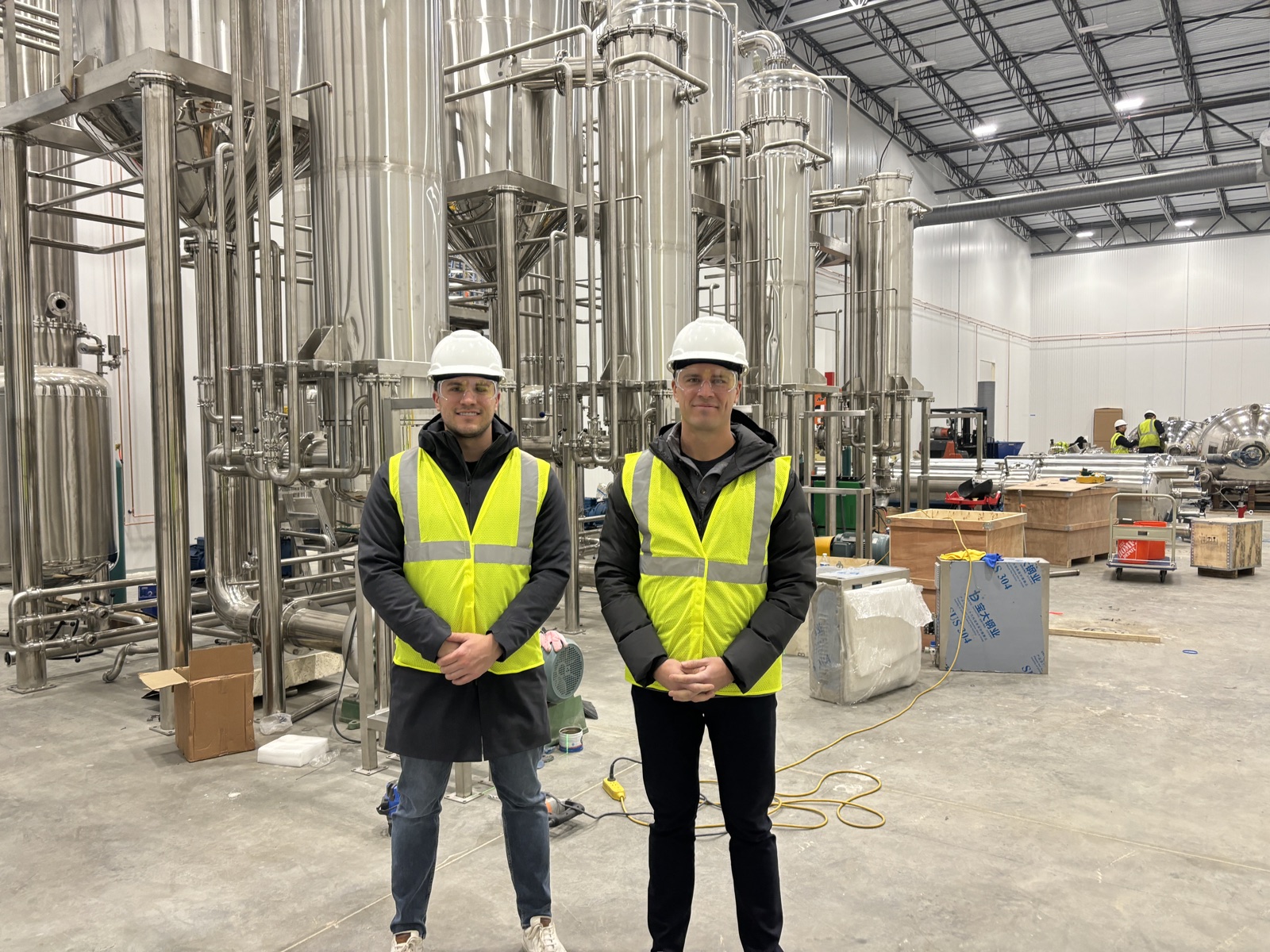
I can show you photos. [shares photos] This is our concentrator, before we opened the plant. These are the concentrators. This is our loading dock; it’s 165,000 square feet. This is where they package. These are the lines: something comes in on the line, gets hot-filled, then gets loaded onto crates for the retort process. And this is our first 20 kettles installed. There are now 80.
Nicole
How much is in one kettle?
Justin
About 2,000 gallons.
Nicole
Wow.
Justin
It’s now the largest bone broth plant in the country. 165,000 square feet. We have room to do about $450 million in revenue there, and we’re looking at buying the space next to it to expand. It’s been quite a journey: we’ve put almost $60 million into the plant at this point.
Nicole
Why build your own plant? To control the economics?
Justin
Economics, quality and taste. If you look at the companies that have gotten the biggest in food over the last 20 years, about five billion-dollar companies have been built, and four of them did their own manufacturing.
The reason, in my view, is that since the ’80s big food companies have been cutting quality to improve margin. Most co-packers, manufacturers you contract with to make your product, sell to big food companies or somewhat scaled brands. If you want a durable competitive advantage against those guys, you have to go vertically integrated as soon as you can. We’ve been doing it to some degree since 2018.
If you’re not vertically integrated, someone can find my manufacturer and say, “Make the Kettle & Fire recipe under my brand,” and price it 10% lower. Because most people buy in grocery, your biggest competitor as a brand is private label or big food. If they can buy your product from the same manufacturer and price it slightly lower (a Walmart private label brand, or a big food company), you have no durable product advantage.
By vertically integrating, we think that after a year or two of investment we’ll make back the cost of the plant on margin. There are margin benefits, but more importantly we’re in charge of making the best product possible. A co-packer isn’t incentivized to give you the best product possible. You’re a customer; you tell them if you’re happy. They were never excited about doing R&D in a kitchen to make the product slightly better. Now we have four people full-time in R&D figuring out how to improve yields and flavor, which no one was going to staff for us.
It was an expensive lesson and an expensive investment. Building a factory is hard, and standing it up is hard. But now that we have it, it’s going to be the most durable source of our competitive advantage.
Nicole
Is the other source of advantage where you source your bones?
Justin
It is, but it’s more copyable. We were the first to do a grass-fed bone broth. Now grass-fed meat is a much bigger market, so you can source grass-fed bones from all over. That was less true when we started.
And you’re competing against big public food companies. If they found our supplier, they could buy the supplier if they could use all the offtake, or say, “Work with us rather than this small brand Kettle & Fire that isn’t going to pay you as much.” So the only source of durable competitive advantage is vertical integration, plus some amount of brand.
Nicole
I didn’t realize manufacturing was such a dog-eat-dog industry.
Justin
In our space, because it’s food. If you’re building Tesla, there’s nowhere you can go as a new startup to buy a car off a manufacturing line. Food is the opposite. If you want to start a chip brand, you could call 100 manufacturers that make chips, say “I want to make this chip with this tweak,” and do it.
Regulatory capture
Nicole
You’ve written in your newsletter: “I’m convinced that regulatory capture is upstream of many of the biggest issues we have in society. Where I live, we’re within a three-hour drive from Houston, Dallas and San Antonio, the four most productive cities in Texas. For decades, groups in Texas have worked on legislation to get high-speed rail built that would connect each of these thriving metros. And for decades these initiatives have been scuttled by intensive lobbying by Southwest Airlines.” How do you think about regulatory capture and its downstream ripple effects across industries, but particularly healthcare, where you’ve spent a decade of your life building?
Justin
One of the best examples, in terms of real outcomes, is that regulatory capture makes everything more expensive and everyone poorer in a literal way. Take the example of Uber moving into Manhattan. The taxi medallion system was about a million dollars for a medallion, which gave someone the right to rent a car for $40,000 a year and then work 12-hour days, six days a week to make that back. When you removed that and Uber came on the scene, they were operating at 40 to 50% lower prices, bringing all these drivers and supply online. That’s an open-and-shut A/B test of how much regulatory capture was driving prices up.
It’s far worse in healthcare. It’s invisible because it’s harder to understand. Healthcare is one of the only industries in the country where I am a consumer but not a payer of the things I buy. When I go to the doctor, I’m paying health insurance premiums, which go to the insurance company, which manages the payment flow. Consumers are divorced from healthcare until they get a massive medical bill that doesn’t get approved (almost 50% of medical bills in this country), or they deal with a medical bankruptcy, or they pay cash for their drugs.
And in this convoluted system, healthcare companies are either a top one or two lobbyists or a top one or two employer in every state in the country but four. It creates a scenario where people aren’t aware of how much cheaper healthcare could be, because there’s an insane system of licensing and regulation: everything that makes healthcare not a market good. Which means everyone pays more and the service is far worse.
Inventing a new market: using HSA/FSA funds for preventative health
Justin
How could you fix incentives so people are incentivized to invest in prevention? The insurance company isn’t doing it. Your doctor isn’t giving you bonuses or telling you to exercise or eat better. After digging into it, I came to believe that most of the healthcare system is so captured that you’re not going to make a dent in it. You see this all the time: someone starts a healthcare company, and after a decade they pivot to billing insurance companies. They start with a big vision and end up making the healthcare system slightly more efficient. That’s it. It’s not disruptive and it’s not driving change.
There’s one chunk of the healthcare system where the payment mechanism and markets work: HSA, FSA and HRA dollars, where an individual is spending their own money. They’re the payer of what they’re buying and the consumer of what they’re paying for. That was my thesis. If we want to drive more dollars toward prevention (exercise, food, sleep, the things that make a tremendous difference on health outcomes), the right place to start is the least captured one: this smallish bucket of consumer-directed funds. We can build a very good business there, expand outward, and build something more disruptive to the current healthcare system.
Nicole
We talked right before this about an aggressive interpretation of the healthcare system and its parts. What is TrueMed doing differently compared to other companies in the HSA space?
Justin
We invented the market we’re in. The IRS, with HSA, FSA and HRA funds ($180 billion in funds), has said these funds can be used on anything a doctor believes can treat, reverse or prevent a specific condition, if you have a doctor’s note called a letter of medical necessity.
In practice, people would go to their doctor and say, “Write me an LMN, I have crazy back pain,” and the doctor would say, “Here, you can use this to get physical therapy,” or something else that isn’t automatically HSA- or FSA-approved.
Our interpretation, from reading the regulations, was: if anything can treat, reverse or prevent a disease (a food intervention, exercise, sleep aids), it qualifies. Studies show that if you’re worried about heart disease or many other conditions, sleep or exercise interventions work better than any prescription pharmaceutical we can prescribe for the common conditions afflicting almost 100 million Americans. Obesity is a good example.
So: if we can find enough doctors who believe in functional medicine and lifestyle interventions, who follow the data showing how effective exercise, food and sleep interventions are, they can write these letters of medical necessity. And we can take advantage of COVID-era telemedicine laws, where telemed was vastly expanded, to make it easy for anyone with qualifying conditions to spend HSA/FSA dollars on a sleep aid, a Peloton, a gym membership.
When we started, we were the first company doing this, certainly the first at scale. No one was using these LMNs. No one was aware of the corpus of research showing how effective these interventions are. A lot of people in the industry said, “We’ve never heard of this.” But when you get into dialogue with them, you ask: should the American healthcare system structurally incentivize only pharmaceuticals, surgeries and reactive care, when we have these mechanisms? Mostly in the form of HSA plus this LMN thing that we packaged up and scaled. It’s the best tool I’m aware of to incentivize people to invest in prevention.
That was our aggressive interpretation: exercise, food and sleep are medical interventions for people with qualifying conditions, and those interventions drive tremendous health outcomes.
Founder hardships
Nicole
Tell me about some trying times at Kettle & Fire.
Justin
Geez, there was a lot that was hard, but two things account for most of it.
- Times when I underestimated how important a field was. Every CPG business has a lot of people in finance, and for the first year and a half I thought that was dumb, because we do things differently at Kettle & Fire. It was only after we almost ran out of cash twice that I understood why people have fully staffed finance and bookkeeping teams. Managing cash flow is one of the three things you have to be very good at to build a successful CPG company. Not understanding why an industry does something has caused a lot of problems for us.
- The times we came closest to dying were when we hired someone older and experienced and I had this internal narrative of “they know what they’re doing, I don’t, I’ll let them figure it out.” We hired a COO who almost killed the company. My brother and I looked at how he was managing cost and margin and said, we need to fire this guy and take over immediately.
The same thing happened when we were building our plant. We’d never done manufacturing or a build-out, so we hired a guy who had seemingly done two plant build-outs from zero to functioning. He almost destroyed the business: he made bad decisions with the plant that cost a lot of money to fix.
That type of decision is one I’ve historically been bad at and I’m trying to get much better at. Trust but verify, and don’t over-hope that someone with experience is going to save us. To put a finer point on it: there have been zero times in the company’s history where I’ve been able to hire someone, look away completely, and have it work.
Nicole
You have to be healthily paranoid.
Justin
Yes, especially the first six months: getting in the weeds, understanding what they do, slowly building trust and verifying they’re doing things right. That’s been hard learning for us.
In 2018 we built our own manufacturing line inside a manufacturing partner’s plant, and we’d raised $16 million. Most of that was going to build out that line. We’d hired the COO, and he hadn’t been keeping tabs on cash, investment and margin. We were burning money faster than planned, the line was more expensive than planned, and we were on track to run out of cash about $2 million short.
I had to go to our investors and say: the COO isn’t working, I fired him, and this is going to take more money than we wanted. They said they’d put in the extra $2 million — at egregious terms.
So in about two weeks, my brother and I funded $1.2 million of the bridge round ourselves, set our own terms, and raised the remaining $800,000 from new investors.
Nicole
How did you get to $1.2 million yourselves?
Justin
We had taken some secondary in the round.
Nicole
So you self-funded it?!
Justin
We took out secondary, paid taxes on it, and put it back into the company at a higher valuation, so we’d have a high watermark and avoid terrible valuations and terms that would follow us for the next decade. At the time I thought, if this doesn’t work, it’s a total disaster for us.
Nicole
That is serious financial maneuvering. That says something about your trust in your own business.
Justin
For sure. And we were fortunate the core business was working so well. It was obvious that if we could make the product — which we believed we could — the business had 10 times more demand than we could serve. Which ended up being correct.
But it felt like a big risk. Had we not done it, there would have been so many downstream consequences from bad terms and investors with more control. It would have messed up a lot of what we’ve done since.
Finding genetic health risks with AI
Nicole
I want to go through some things you’ve written on your Substack and talk about the future of health and new-age interventions. This spring you put your 23andMe data into Claude and it told you that you have APOE4. Was it expected? And what does it make you do now?
Justin
One of the challenges in healthcare is that people don’t know how to price prevention. If you say, “If I switch my diet, or start exercising three times a week based on my specific risk factors,” how effective is that? What’s the ROI of going to the gym versus not? That’s an unpriced problem. There’s math you could run, but no one is running it today.
The more you hone in on the specific chronic risk factors you have (mine is a 30% higher risk of Alzheimer’s from that genetic mutation), the closer you get to pricing it. You can say: Alzheimer’s is likely to hit at this point, here’s my personal risk factor, here’s what Alzheimer’s treatment costs, here’s what we know works from a prevention standpoint.
That’s what makes these tools so interesting. I can do a cheap genetic test, run it through Claude for free, and learn that for someone with that mutation, improving sleep is one of the highest-leverage interventions available. There’s far higher ROI for me investing in sleep interventions than for someone who doesn’t have this mutation.
As we get closer to that, what opens up is a landscape where you can see the risk factors you specifically have, from genes and all these tests anyone can now access, and then find the highest-ROI preventative intervention for you. That’s where we’re going: everyone has a personal understanding of their risk factors and the cost curve of the highest-ROI, lowest-cost interventions to invest in.
Building that understanding is what AI uniquely unlocks, which is amazing. It’s the best possible thing so many people can have: a free doctor, high context, deeply knowledgeable on every domain, plus tests that reveal your specific risk factors. It should be transformative for people who take advantage of it.
Nicole
And 23andMe didn’t tell you about this?
Justin
No, they legally can’t, thanks to a settlement. They can’t be in the practice of medicine.
Nicole
Interesting — another regulatory capture situation.
Justin
It’s going to hold back tens of millions of people.
Nicole
What should a regular consumer be testing?
Justin
Genetic testing is one of the best places to start. And labs every 6 to 12 months are incredibly important, something like Function Health or Superpower.
If you have those two things — your genes, which tell you the risk factors you’re likely to have, and your labs, which show which of those risk factors are showing up in your bloodwork as cause for concern — that’s the picture. I have the APOE mutation, but when I look at my labs, which I get done every three to six months, my inflammatory markers and a bunch of other things are extremely low. So: I have this risk factor, but it’s being well managed so far.
That set of information, how you’re tracking relative to your risk potential, is what almost everyone should be focused on and running tests around.
Peptides fall into a category Justin calls “more life”
Nicole
You’ve written about peptides. To quote what you wrote in March: “The pharma paradigm is more on the don’t-die side of things. Don’t die of heart disease: statins. Don’t be depressed: SSRIs. Don’t have asthma. Peptides are the opposite. They fall into a category I call more life: more energy, better skin, less inflammation, less pain.” Talk to me about peptides, which is a big trend sweeping Silicon Valley.
Justin
GLP-1s are one of the first classes of human enhancement drugs. There’s no traditional pharmacology where you go and say, “I’m great, but I want to be better. I want more energy, more sex drive.” With peptides, you have some of the healthiest people in the country, a lot of the biohacking class, taking them to be more of something, not to fill a deficiency.
These things are fairly effective. They’re under-regulated right now. As we get more clinical trials, more data and more n-of-1 experiments, they’ll become commonplace in American society. We’re probably moving toward an era where people interested in this will be on a personalized cocktail of peptides and other therapeutics, because the ROI is there. It’s an interesting and in some ways scary world we’re moving toward.
Nicole
And because they’re unregulated, the average American who wanted peptides would have to source them from Chinese gray-market websites. So the hard part is sourcing things that are actually good for you.
Justin
I have this take that the FDA has killed more people than any American institution ever, and this is part of the reason, through errors of commission or omission. The FDA has said, we don’t understand enough about peptides. But rather than run studies, or test them for safety and say “anyone can sell BPC-157 assuming you follow X, Y and Z on safety and good manufacturing practice,” they’ve put their hands up. That forces people who want these products to buy from the worst possible sources.
Until recently, the only companies selling peptides online were companies with such high risk tolerance that they know they’re breaking the law or operating in a gray area. That’s a bad selection effect. You don’t want to only be able to buy from the most risk-on people, because those are also the people who cut corners in other ways. It’s the worst of all worlds as a regulatory regime.
Small amounts of money to high potential people can make a huge difference
Nicole
You give grants to young people under 25. What are you excited about funding?
Justin
I’m focused on an archetype of person: incredibly high agency, who grew up in an environment that hasn’t plugged them into Stanford or the tech scene, but who has ambition and wants to do something in the world without money or resources.
That type of person is who we as a society should be investing far more in, because it’s often the type who goes on to do amazing things. In my own life, when I was 22 and graduating college, I didn’t grow up wealthy and didn’t have a safety net. I had a mentor who said, “Try the startup thing. If it doesn’t work, move in with me, I’ll give you five grand, and you can figure out your next thing.” Even the promise of five grand if I failed meant I could take a more risk-on path. That led me to what I’m doing now.
Small amounts of money given at very early stages to high-potential people can make a huge difference in their lives. I want to find as many of those people as I can.
Nicole
Yeah, I reject the narrative that you’re born risk-on. People have financial, family — even immigration — circumstances that make them unable to take risks. It’s false to say that if you wanted to, you’d just do the thing. There are a lot of constraints, and relaxing them through capital or otherwise matters.
Justin
There are people who are so risk-on: “I’ll live in a car, I’ll be homeless, I’m going to work on the company.” Those people exist. But if I hadn’t had that offer, I’d probably be working a normal job and thinking about entrepreneurship, or it would have taken me a decade longer to start. People massively underrate the impact that changing some of these constraints can have.
Nicole
What are you excited for people to build in healthcare?
Justin
We’re not focused enough on making actual change in the healthcare system. It’s a travesty that 50 million Americans suffer from back pain. Who’s working on curing back pain? We have this long history of curing infectious disease, and almost no one (outside of maybe GLP-1s recently) is looking at chronic conditions and saying, “Wait, we can be done with this. We can cure back pain, we can cure sinus issues.” I want to see far more people taking big swings at solving massive diseases.
The things the healthcare system isn’t curing, like back pain and autoimmune, are the multifactorial problems. Our healthcare system is very good at this shape: you break a leg, you see a leg specialist. But for conditions with multiple interacting components, it’s a disaster at coordinated care, care management, or care progression. That shape of problem is what I want to find.
Nicole
Thanks for doing this.
Justin
Thanks for having me, this was great. And thanks for doing so much prep.

If you enjoyed this interview let Justin know, and read more on his Substack The Next.